
Home Cinema Room Size Guide: How Much Space Do You Really Need?
Planning the Perfect Home Cinema Room Size for the Best Movie Experience
Have you ever dreamed of having your own cinema at home? Imagine sitting in a comfortable recliner, the lights dimmed, your favourite movie playing on a giant screen, and every sound making you feel like you’re part of the action.
- Planning the Perfect Home Cinema Room Size for the Best Movie Experience
- Why Does Room Size Matter?
- What Is the Ideal Home Cinema Room Size?
- Start With the Screen, Not the Speakers
- Think About Seating Early
- Ceiling Height Is More Important Than You Think
- Add Atmosphere With Smart Lighting
- Don’t Ignore the Walls
- Why Good Planning Saves Money
- Projector Placement Can Make or Break Your Cinema
- The Best Speaker Placement for Immersive Sound
- Why Many Luxury Homeowners Choose KEF Speakers
- Soundproofing vs Acoustic Treatment
- Choosing the Right Home Theatre Seating
- Lighting That Completes the Cinema Experience
- Common Home Cinema Planning Mistakes
- Room Size Checklist
- Conclusion
- Frequently Asked Questions
- 1. What is the minimum room size for a home cinema?
- 2. Can I build a home cinema in a small room?
- 3. Is Dolby Atmos worth it?
- 4. Are acoustic wall panels really necessary?
- 5. Which speakers are recommended for premium home cinemas?
- Why Choose Afak Home Cinemas?
- Final Thoughts
It sounds amazing, but before choosing the projector or speakers, there’s one thing you need to get right: the home cinema room size.
Many people think they need a huge room to build a great home cinema. That’s not true. A well-planned small room can often deliver a better movie experience than a large room with poor planning. The secret is making smart use of the space you already have.
At afakhomecinemas, we often help homeowners across the UAE plan cinema rooms that fit their homes and lifestyle. Whether you’re creating a dedicated entertainment room or upgrading a spare room, the right planning makes all the difference.
Why Does Room Size Matter?
The size of your room affects almost every part of your cinema setup.
A properly planned room helps you:
- Enjoy clearer sound
- Watch movies from a comfortable distance
- Get better picture quality
- Reduce echoes
- Create a more immersive atmosphere
- Make the room comfortable for family and guests
When the room is too small for the equipment, everything feels cramped. If it’s too large without the right setup, the sound can become weak and uneven.
That’s why planning comes before buying equipment.
What Is the Ideal Home Cinema Room Size?
There isn’t one perfect measurement that works for every home. Instead, the best room depends on your available space, the number of seats you want, and the type of equipment you plan to install.
Recommended Room Sizes
| Room Type | Room Size | Best For |
| Compact | 3 m × 4 m | Small families and apartments |
| Standard | 4 m × 5.5 m | Most villas and homes |
| Premium | 5 m × 7 m | Dedicated cinema rooms |
| Luxury | 6 m × 8 m or larger | Large villas and premium entertainment spaces |
Even a compact room can become a stunning luxury home cinema when every part is designed correctly.
Start With the Screen, Not the Speakers
Many homeowners buy the biggest screen they can find because it looks impressive.
Unfortunately, bigger isn’t always better.
If the screen is too large for the room, you’ll have to move your head constantly while watching. That becomes tiring during a two-hour movie.
Instead, choose the screen after measuring the room.
Here’s a simple guide.
| Screen Size | Recommended Viewing Distance |
| 100 inches | 3–3.5 metres |
| 120 inches | 3.5–4 metres |
| 135 inches | 4–4.5 metres |
| 150 inches | 4.5–5.5 metres |
This gives your eyes a comfortable viewing angle while allowing you to enjoy every detail.
Simple Room Layout
A good cinema layout doesn’t have to be complicated.
————————————————-
| Projection Screen |
| L Speaker Center R Speaker |
| |
| |
| Home Theatre Seating |
| |
| Surround L Surround R |
| |
| Entrance Door |
————————————————-
This layout keeps the picture centred while allowing sound to travel naturally around the room.
Think About Seating Early
One of the biggest planning mistakes is leaving seating until the end.
Comfort matters just as much as picture quality.
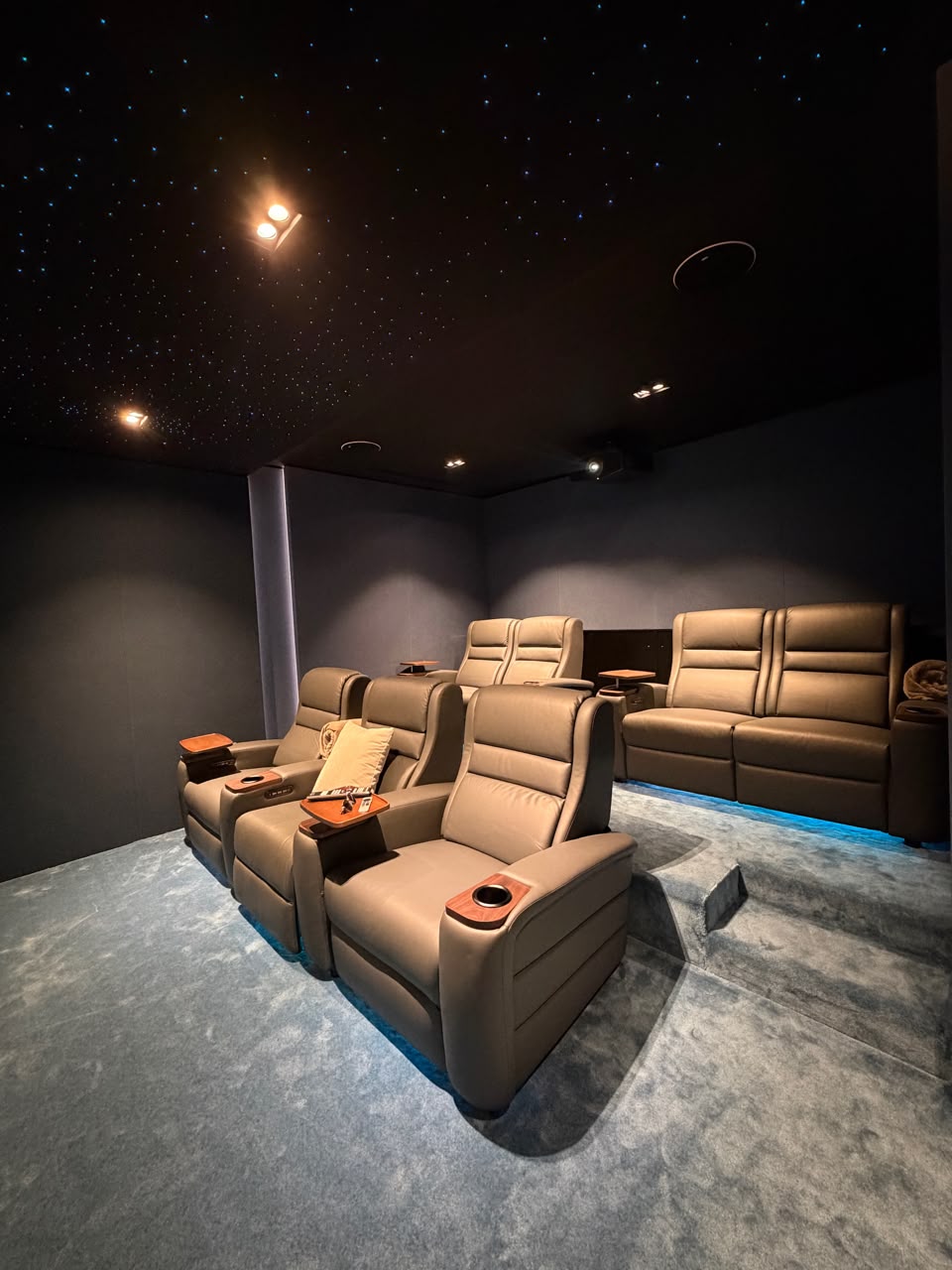
Modern home theatre seating includes reclining chairs, cup holders, USB charging ports, and adjustable headrests. These features need extra space, especially when the recliners are fully extended.
A comfortable cinema room should have:
- Around 90 cm behind reclining chairs
- Enough legroom between rows
- Easy access to every seat
- A clear walkway to the entrance
Planning this first helps avoid expensive changes later.
Ceiling Height Is More Important Than You Think
Many people only measure the floor.
The ceiling matters too.
A higher ceiling improves sound distribution and makes the room feel more spacious. It also gives more flexibility when installing projectors and speakers.
If your room has a lower ceiling, don’t worry. A professional home theatre installation UAE company can still create an excellent cinema by choosing the right equipment and layout.
Add Atmosphere With Smart Lighting
Lighting changes the mood of the room.
Bright ceiling lights make movies less enjoyable because they reduce picture contrast.
Instead, many homeowners choose layered lighting.
Popular choices include:
- Wall sconces
- LED strip lighting
- Floor pathway lights
- Dimmable lighting
- Fiber optic lighting for a starry-night ceiling effect
A ceiling filled with tiny fibre optic stars creates a premium cinema feeling without distracting from the screen.
Don’t Ignore the Walls
Bare walls reflect sound.
That reflection creates echoes, making dialogue harder to understand.
Installing acoustic wall panels helps absorb unwanted sound reflections and keeps every conversation, explosion, and soundtrack clear.
Today’s acoustic panels are available in many colours, patterns, and fabric finishes, allowing them to blend beautifully with modern home cinema design Dubai projects.
Why Good Planning Saves Money
Many people believe they save money by buying equipment first.
The opposite is usually true.
Planning the room before purchasing projectors, screens, and speakers helps avoid:
- Buying the wrong screen size
- Poor speaker placement
- Visible cables
- Expensive reinstallation
- Furniture that doesn’t fit
A little planning now can prevent a lot of frustration later.
Projector Placement Can Make or Break Your Cinema
Once you’ve chosen your screen size, the next step is finding the perfect place for your projector.
Many people assume they can mount it anywhere on the ceiling. In reality, every projector has a recommended throw distance. This is the space needed between the projector and the screen to produce a sharp, properly sized image.
Installing the projector too close may create a small picture, while placing it too far away can make the image larger than the screen.
Before installation, check:
- Screen size
- Throw distance
- Ceiling height
- Cable routing
- Ventilation around the projector
- Easy access for future maintenance
Planning these details early keeps the installation neat and avoids costly adjustments later.
The Best Speaker Placement for Immersive Sound
A stunning picture deserves equally impressive sound.
One of the biggest mistakes homeowners make is placing all the speakers at the front of the room. That setup produces sound, but it won’t create the immersive feeling you experience in a commercial cinema.
A properly planned Dolby Atmos home theatre surrounds you with sound from every direction, including above your head.
Imagine hearing:
- Rain falling from the ceiling
- A helicopter flying overhead
- Footsteps moving behind you
- Birds flying across the room
That’s the difference a well-designed Dolby Atmos system makes.
Simple Speaker Layout
Front Wall
Left Centre Right
[ Projection Screen ]
Seating
Side Left Side Right
Rear Left Rear Right
Ceiling Atmos Speakers
Every speaker has a purpose, and placing them correctly helps every seat enjoy balanced sound.
Why Many Luxury Homeowners Choose KEF Speakers
When planning a luxury home cinema, sound quality is just as important as the picture.
Many premium cinema rooms include KEF speakers because they deliver detailed, natural sound while blending beautifully into modern interiors.
Their Uni-Q driver technology allows sound to spread evenly across the room, meaning every seat enjoys a similar listening experience.
Whether you’re watching a quiet drama or an action-packed blockbuster, KEF speakers help every voice, soundtrack, and sound effect feel clear and lifelike.
Of course, the best speaker is the one that suits your room size, listening preferences, and budget. Choosing the right equipment is easier when it’s matched to your room instead of buying based only on specifications.
Soundproofing vs Acoustic Treatment
These two terms are often confused, but they solve different problems.
| Soundproofing | Acoustic Treatment |
| Stops sound from leaving or entering the room | Improves sound quality inside the room |
| Uses insulation and construction materials | Uses acoustic wall panels, bass traps, and sound-absorbing materials |
| Best during construction | Can often be added later |
For most homeowners, acoustic treatment makes the biggest difference to movie enjoyment because it reduces echo and improves speech clarity.
Choosing the Right Home Theatre Seating
Comfort can completely change the movie experience.
Think about how long you usually watch movies. Sitting in an uncomfortable chair for two or three hours quickly becomes tiring.
Quality home theatre seating offers:
- Adjustable reclining positions
- Head and neck support
- Cup holders
- USB charging ports
- Storage compartments
- Premium leather or fabric finishes
If you’re planning more than one row, consider installing a raised platform so everyone has a clear view of the screen.
Lighting That Completes the Cinema Experience
Lighting isn’t only about making the room look attractive. It also helps improve picture quality and creates the right atmosphere.
Many homeowners combine several lighting layers, including:
- Wall sconces
- Recessed ceiling lights
- Step lighting
- Hidden LED strips
- Fiber optic lighting across the ceiling
A starry ceiling is one of the most popular features in modern home cinema design Dubai projects because it creates a luxury feel without distracting from the movie.
When connected to a dimmer, you can adjust the brightness before the film starts and lower it once the movie begins.
Common Home Cinema Planning Mistakes
Even beautiful cinema rooms can have disappointing performance if they’re not planned properly.
Here are some of the most common mistakes to avoid:
❌ Buying equipment before measuring the room
❌ Choosing the biggest screen instead of the right screen
❌ Ignoring speaker placement
❌ Forgetting acoustic treatment
❌ Installing bright lights directly above the screen
❌ Leaving no walking space behind reclining seats
❌ Using ordinary furniture instead of dedicated cinema seating
❌ Forgetting cable management during construction
Avoiding these mistakes saves money and helps create a cinema that’s enjoyable for years.
Room Size Checklist
Before you begin your project, ask yourself these questions:
✔ Is there enough distance between the screen and seating?
✔ Can the projector be installed at the correct throw distance?
✔ Is there enough space for reclining chairs?
✔ Will sound travel evenly throughout the room?
✔ Can acoustic treatment be added if needed?
✔ Is there enough ventilation for electronic equipment?
✔ Does the lighting support movie watching?
If you answer “yes” to most of these questions, you’re already on the right path.
Conclusion
Choosing the right room size is one of the biggest decisions you’ll make when building a home cinema. Bigger isn’t always better.
A well-planned room with the right seating, screen size, projector placement, lighting, and sound system will always deliver a better experience than a larger room with poor planning.
Whether you’re creating a dedicated movie room or upgrading an existing space, taking time to design the layout properly helps you enjoy better picture quality, clearer sound, and greater comfort for years to come.
If you’re planning a luxury home cinema, working with experienced professionals can help you avoid expensive mistakes and make the most of your available space. Every home is different, and the best cinema rooms are designed around the people who will enjoy them.
The right home cinema room size doesn’t have to be the biggest room in your house. It simply needs to be the room that’s planned well.
Frequently Asked Questions
1. What is the minimum room size for a home cinema?
A room around 3 m × 4 m is often enough for a comfortable cinema with a projector, surround sound, and reclining seats.
2. Can I build a home cinema in a small room?
Yes. With the right layout, projector, seating, and acoustic treatment, small rooms can provide an excellent movie experience.
3. Is Dolby Atmos worth it?
Yes. A Dolby Atmos home theatre creates three-dimensional sound that makes movies feel much more immersive than standard surround sound.
4. Are acoustic wall panels really necessary?
They greatly improve sound quality by reducing echoes and making dialogue easier to understand.
5. Which speakers are recommended for premium home cinemas?
Many homeowners choose KEF speakers because they deliver balanced, detailed sound and work well in both small and large cinema rooms.
Why Choose Afak Home Cinemas?
Every home has different dimensions, budgets, and design preferences. At Afak Home Cinemas, we create custom cinema rooms that combine comfort, performance, and elegant design.
Our team helps homeowners across the UAE with:
- Home cinema design
- Projector installation
- Premium audio systems
- Acoustic treatments
- Recliner seating
- Star ceiling lighting
- Complete cinema room solutions
Whether you’re building a new villa or upgrading an existing room, careful planning helps you enjoy a cinema that’s made just for you.
Final Thoughts
A successful home cinema isn’t about filling a room with expensive equipment. It’s about creating the right balance between space, comfort, sound, and picture quality.
Before buying your projector or speakers, measure your room, plan the layout, and think about how you’ll use the space. That approach helps you enjoy better results while avoiding unnecessary costs.
If you’re ready to build your dream cinema, professional planning is one of the best investments you can make.
A carefully designed home cinema room size gives you a comfortable space where family and friends can enjoy unforgettable movie nights for years to come.